

Chapter 11: Kane and Alice

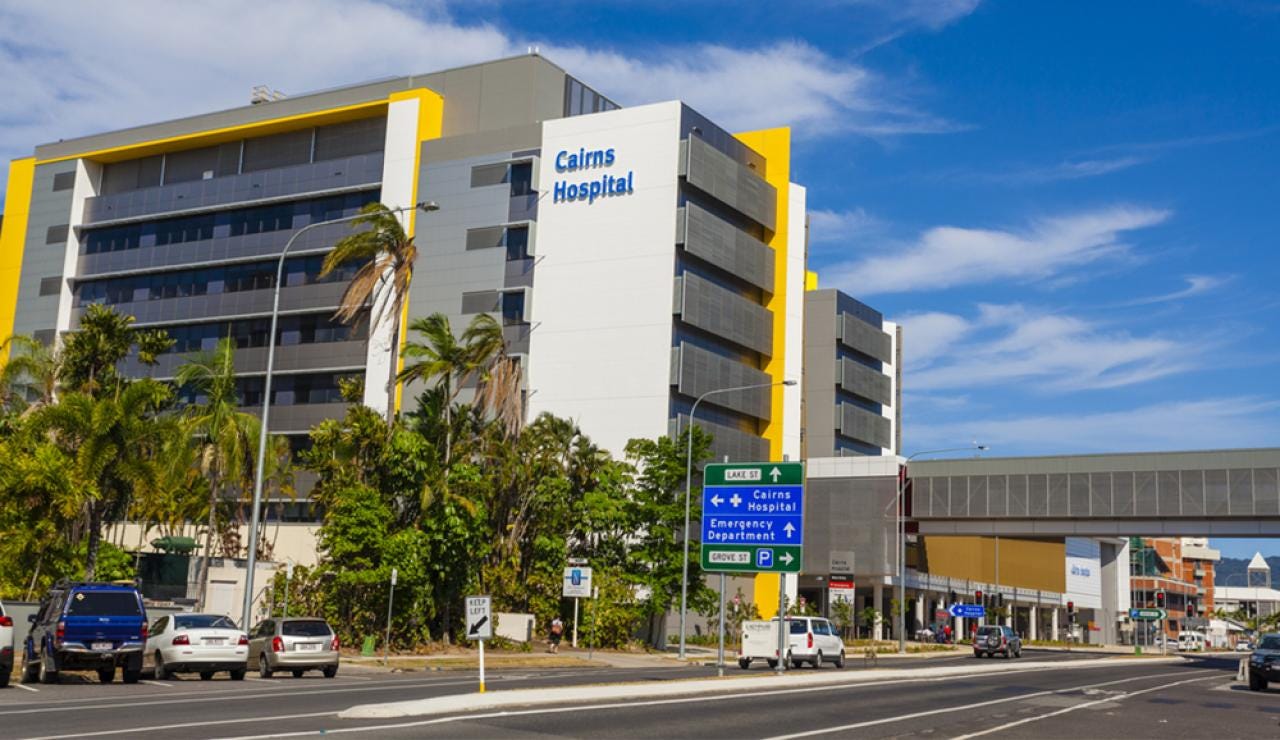
Kane held an appointment as a Visiting Medical Officer at the Cairns Base Hospital. He had two operating sessions and one session each in the fracture and orthopedic clinics. The rest of his working time was in private practice, and he knew the three As of success: ability, amiability and availability. He rented rooms in a restored Queenslander house in Lake Street, near the private hospital, close to the day surgery unit. Kane made sure he was available to see any patients the family medical practices referred to him, maintaining one rule for himself: if possible, he would be home for the children’s dinner and story time. The local practices assumed Kane had the ability, confirmed as they saw his results. He worked hard on appearing affable, and the more he worked on it, the easier it became. In time, he hoped to rediscover his natural good humour. There was plenty of work, and he was soon busy.
On a wet early April day, Kane walked across Lake Street from the hospital to the consulting rooms and climbed the external wooden staircase to a covered veranda, eschewing the lift for the less able. Off the veranda, with louvred windows, cane furniture, green cushions and indoor tropical plants, was a fan-cooled reception area. The consulting rooms behind this opened to a relaxing view of the mountains.
Alice Dodgson came with a letter of referral:
Dear Kane
Alice is 30. She has had a swelling on the dorsum of her right foot for some months. It is increasing in size and becoming painful. There is no obvious precipitating cause. Her X-rays are normal, and she is otherwise well. Would you diagnose and treat her, please?
Regards
Richard
‘Hello, Alice. Come in.’ Kane extended his hand, grasping hers firmly but gently. He looked briefly into her light, blue eyes, her whole face rising with a friendly smile. He saw straight blonde hair dropping below her shoulders, a fringe narrowing her forehead. ‘Call me Kane. Sit down and make yourself comfortable.’
‘Thank you, Kane.’
Alice didn’t sit straightaway. Through the back window, she looked over the wet roofs and at the driving rain. ‘How long does this go on for?’ she asked.
‘All through to the end of April. They say May can be miserable as well. This is my first full wet here, so I’m only just getting used to it,’ Kane said.
‘It’s not so bad,’ Alice said.
Kane always arranged a chair for the patient to sit next to him. When Alice sat, there was only the corner of his desk between them.
‘What’s worrying you?’ Kane asked.
‘I have a swelling on my right foot. My shoe rubs on it.’
‘Is it painful when you are resting, or at night?’
‘Yes. Both. It aches.’
Kane turned to note this on the computer. ‘What about walking?’
‘We were doing a lot of rainforest trekking. This is a beautiful place, especially in the rain. We’ve had to stop that.’
‘Who’s we?’
‘My husband, Peter.’
‘Any kids?’
‘No. Not even a dog.’
‘Are you working?’
‘A temporary job as a primary school teacher. I’m having trouble with that now. Can’t stand long or chase them about.’
Kane turned fully towards her. ‘Is that a Canadian accent?’
‘Yes. Smart boy.’ Alice smiled. ‘How can you tell?’
Kane said, ‘I spent a year in Toronto.’
‘What did you do?’
‘Paediatrics and tumours. I don’t do that anymore. Not since I came here. What brought you to Cairns?’
‘I came out here for Peter. He’s doing a project at James Cook Uni on the effects of land clearing on the reef.’
‘Great. We must keep it for our kids.’
Alice widened her eyes. ‘How many children do you have?’
‘Three glorious girls.’
‘How old?’
‘Seven, five, three.’
‘Well-spaced. Planned that way?’
‘Let’s have a look at you,’ Kane said.
Kane watched Alice bend and take off her sandals, then limp to the couch. Her off-white skirt swung loosely to just above her knees. She had slim legs and pale, clear skin. Not much time in the sun yet, he thought. He examined the small, soft, slightly tender swelling on the top of her right foot, unable to feel a clear edge to it. She had discomfort turning her midfoot in and out. The rest of her lower limbs were normal. He gently palpated her abdomen. Clear. He put her X-rays on the viewing box. Normal.
Alice put on her sandals and joined Kane at his desk.
‘The most common cause of a swelling here is a simple ganglion.’ Kane paused. ‘They’re usually firm and round and feel like a tight balloon. Your swelling isn’t like that. I’m not sure what it is, and it’s growing and painful. I don’t think it’s anything to worry about, but I’d like to be certain.’
‘More tests?’
‘I think we should excise it and send it to pathology for a diagnosis.’
‘I was expecting you to say that’, Alice said, looking resigned. ‘What does it entail?’
‘A small cut over it. You’ll have a general anaesthetic. I could do it as day surgery, and you’d be in and out in an afternoon. You’ll need somebody to pick you up and drive you home.’
‘What about work?’
‘I wouldn’t advise working the next day. The anaesthetic mucks up your brain for a while.’
Kane opened a drawer and took out a form. ‘You need to sign a consent form. There’s a small chance of infection or the wound breaking down. You’re fit and active. If you’re on the pill, you can keep taking it. The only foreseeable major complication is a deep vein thrombosis. They can cause swelling and even varicose veins if they’re severe. Very rarely, they can spread to your lungs and kill you. Sounds frightening, but none of this is likely to happen.’ Kane waited a few seconds. ‘What do you think? Any questions? Do you want time to think about it?’
‘No, that’s fine,’ said Alice. ‘I trust you.’ She laughed. ‘As long as you don’t cut my leg off.’
Kane often wondered how it was that patients could trust so easily.
A few days later, Kane was in the day surgery unit. He liked working there; it was friendly and efficient. Everybody knew their job and performed it well. The nursing director was particular about every detail, even obsessively so. Just the right person. It was an easy afternoon: two knee arthroscopies, a carpal tunnel release, and Alice.
Kane applied a tourniquet, prepped and draped, and made a three-centimetre vertical incision on the top of Alice’s foot. He found a soft, grey, rubbery lesion that extended down and between the joints of the midfoot. He couldn’t fully remove it. He placed the lesion in a sterile container and sent it to pathology for culture and microscopic examination. He closed the skin with a subcutaneous absorbable suture and placed a pressure dressing over the wound. There was no bleeding under the dressing after the tourniquet was removed.
Kane had black tea alone in a small back room and then called into the recovery area to check his patients. Alice was awake.
‘How are you feeling?’
‘Fine. What did you find?’
‘It wasn’t a ganglion. I’ve cut it out and sent it to pathology. I’m not sure what it is; we’ll have to wait and see. Don’t worry, it should be OK. I’ll arrange an appointment for you to see me early next week. Let me know if you have any problems in the meantime.’
The following week, Peter came with Alice, holding her hand.
‘Come and sit down,’ Kane said. He pulled up a chair for Peter.
There was a short pause. Peter squeezed Alice’s hand. Kane looked down, then he looked into her eyes. ‘Bad news. The lesion is malignant. I’m sorry.’ Kane paused again. Alice closed her eyes.
‘It’s called a synovial sarcoma. Very rare.’
‘What do you mean by malignant?’ Peter asked.
‘There is a high chance it will spread and give off secondary deposits. I can’t tell how it will be for Alice. We need to do more tests to see if it has spread already. If it hasn’t, then surgery might contain it.’
‘What surgery?’ Alice interrupted.
‘It needs to be excised so that all the cancer is completely removed. It’s extended into the small joints, which means they would have to be removed, too. We can’t do that to the foot and still leave you something to walk on.’
‘You mean amputation?’ Alice said.
‘I need more information. Possibly.’ Kane reached for a pad of forms. ‘You need a CT, MRI and other scans. We’ll have to consult the oncologist and get another surgical opinion.’
Peter didn’t speak. He was sobbing quietly. Alice turned and put her arm around him.
‘I’m really sorry,’ Kane said, feeling inadequate, not knowing what to say. Uncertain of his own emotions and unable to express the warmth he felt, he feared how Alice might react if he stumbled over expressing his concern for her. Thinking of nothing that might comfort them, he stood up.
‘I’ll organise for you to see the oncology team as soon as possible. We’ll get the investigations underway. Have you anyone close to you in Cairns you can talk to?’
‘No. There’s just us.’
And I don’t know how to support you, Kane thought as he opened the door to see them out.