

Author Notes: Chapter 5

We have met Kane and Isobel at home and found them unhappy with each other. Trainee doctors have presented difficulties for themselves and their families for generations. When I was young, the ‘wife’ was expected to follow her husband wherever he chose to go. Isobel is an example of this, and she and her children have paid dearly for it. Times have changed, but the problem persists. How do families stick together in such difficult circumstances? Does one partner always have to give way?
Kim has forged a different path, but seems not to be much better off - she would like a ‘wife’ herself. We will follow her progress.
Young Sophie is determined to be independent but knows she will soon have choices to make.
And the men? What choices must they make to keep their community together?
When I first became involved in orthopaedics in the 1960s, I was aware of only one female orthopaedic surgeon, Loris Figgins, who attended meetings of our association.
Loris Freda Figgins was the first female orthopaedic surgeon in Australia, beginning her career in Victoria in the late 1940s, though her pioneering work in orthopaedics was established later in her career.
30 May 1927 – 29 December 2023
An extract from her obituary, by Vera Sallen
As a pioneering female orthopaedic surgeon, Loris Figgins was ahead of her time — a role model for female surgeons and an inspiration for those who consider this path.
Born in Melbourne in 1927 as a ”hybrid of four nationalities”, Loris attended Deepdene State School and later went to Methodist Ladies College, where she encountered class consciousness for the first time as she came through her sister’s scholarship.
Loris felt that these learning experiences made her “develop some immunity to unjust and destructive criticism”, a useful asset throughout her entire career.
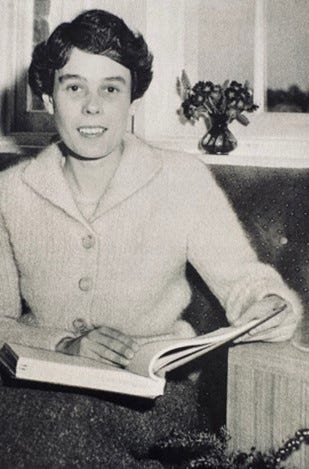
Loris Freda Figgins
Image courtesy of Where Angels Fear to Tread: a pioneering female orthopaedic surgeon by Loris Figgins
In 1945, Loris started medical school at Melbourne University, and she was in the middle of a zoology lecture when the war ended.
After her pre-clinical years, Loris was allocated to the Royal Melbourne Hospital as part of a group of twelve (otherwise) male students and became very proficient in intravenous drips, transfusions, and lumbar punctures. But more than any technical skills she also learnt what she considered the “most important lesson in clinical medicine, in fact, probably in life itself — the value of talking to people and even more importantly, of listening to them”.
Loris had to delay her final exam, as she developed chicken pox after she volunteered to see a newborn with the infection. This left her without a position after medical school. Disappointed, but no stranger to adversity, Loris took a position in the pathology department at the Queen Victoria Hospital. Seeing patients with poliomyelitis, as well as rhesus incompatibility, and congenital cerebral malfunctions became her daily work. It was then that she realised fresh blood had the most therapeutic effect in transfusions, something she became passionate about.
Loris’s next job was an internship at the Frankston orthopaedic section of the Royal Children’s Hospital, an open-air hospital patterned on the design of Robert Jones and Agnes Hunt’s Orthopaedic Hospital in Oswestry, England. Children with chronic bone and joint diseases spent many years in the fresh air in the hope of controlling their illnesses. It was at Frankston Orthopaedics that she met one of her mentors, orthopaedic surgeon John B Colquhoun.
Surgery, particularly spine surgery on those fragile patients with deformities, was a huge undertaking, and Loris set up a system of blood grouping of hospital staff to avoid the long distance to the blood bank in an emergency. Her ongoing passion for the effect of fresh blood transfusions, which resulted in dramatic transformations in tuberculosis patients, led to her next position at the Austin Hospital.
Image courtesy of Where Angels Fear to Tread: a pioneering female orthopaedic surgeon by Loris Figgins
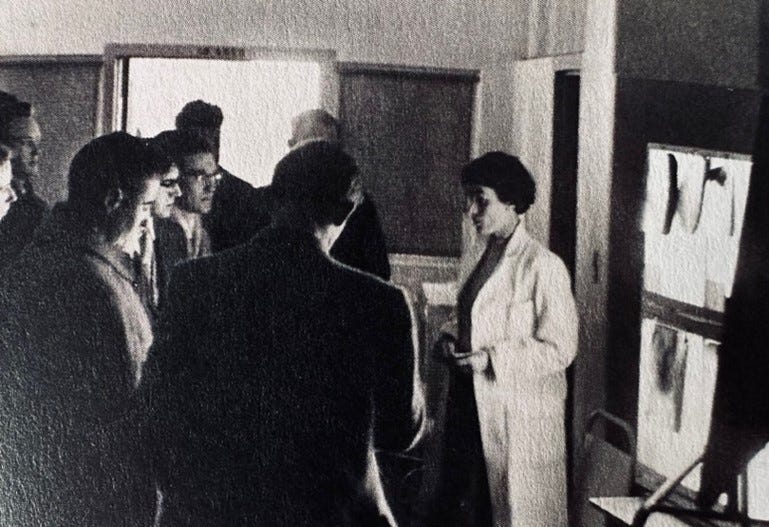
The Austin had been a hospice centre since its inception in 1887. However, due to the centre’s almost epidemic proportions of TB patients, the treatment attracted orthopaedic surgeons, and the hospice was upgraded to a hospital for children and adults.
When antibiotic treatment was introduced between 1944 and 1948, patients could be sent home, and Loris set up a research project on the effect of anaemia in infections. The patients were very much involved in interpreting their own results, and transfusions became a positively perceived treatment. Loris began to observe that in extensive bone infections with associated soft tissue abscesses, drainage was often necessary to optimise the effect of antibiotics and transfusions. Her research project and the pressing question as to why fresh blood was so beneficial was accepted as a thesis, but the publication caused so much bigotry that she decided to relinquish the opportunity and instead pursue her surgical career overseas at the College of Surgeons in England.
Loris arrived in the UK in the winter of 1961. With the assistance and mentorship of Sir James Patterson Ross, who was the surgeon to the Queen at the time, she was able to find suitable accommodation at William Goodenough House, as well as an orthopaedic position in an ‘open-air’ hospital in the countryside of Robin Hood’s Sherwood Forest. She enjoyed the beautiful forest of birch, oak, and elm, but missed the scent of eucalyptus and Australia. Opposite to the hospital was Newstead Abby, which was the home of Lord Byron, whom she learnt had been treated for congenital clubfeet.
Harlow Wood Orthopaedic Hospital covered a large area, including the Derbyshire coal mines, and Loris treated many patients with knee and back injuries resulting from their crouched posture in the narrow mining tunnels.
Back in London, she achieved her goal of a primary fellowship at the Royal College of Surgeons of England. It filled her with pride to be part of this ancient history.
She then worked in general surgery at Copthorne Hospital in Shrewsbury in the hills of North Wales. Due to its remote location, a group of Welshmen known as the ‘Bed Bureau’ provided the only patient transport and ambulance service to the area.
After three years and her second part of fellowship, Loris returned home on a cargo ship. She arrived back in Melbourne in early 1964.
Through her previous mentors, Professor Wright and Dr Gwynn Villiers, Loris was asked to be part of establishing the Trade Union Clinic in Footscray to treat, and more importantly, prevent employment-based injuries. Even though she was not a political person and the Australian Medical Association had blacklisted the site due to its potential connection to communism, she took on the challenge and ended up staying there for nine years.
Meat workers from Geelong presented with tendon injuries, infections, and amputations, as well as Brucellosis, Q fever, and the skin disease Orf. A mesh glove was introduced to help reduce hand injuries and the word spread quickly. The number of patients began to grow each week, eventually requiring a special session to be run every day known as ”the back clinic”. A compulsory lifting class was added to the service and industrial safety became a serious business. It also changed Loris’s life, as she met her later husband at the Safety Convention, where he worked as one of the safety officers. After a major internal strike, the clinic was discontinued, but Loris felt they had achieved a lot in those years and improved safety in the workplace for good.
Once again, she had to move on and decided to start a private practice. Dandenong was a region that was developing at the time and after facing initial pushback due to her previous AMA blacklisted job, she finally became a member of the consultant staff at Dandenong Hospital.
The two-lane Princess Highway in Gippsland in the 1970s passed straight through the towns and speed was uncontrolled. Bikies in their all-black gear took great risks going at high speed in large groups and the accidents and injuries were horrific. The increased flow of patients not only led to a busy orthopaedic unit in Dandenong, but also the decision for Loris and her husband Dave to establish a home in Berwick, far enough away from the work hub, but still close enough for ready access.
They were formed into teams of three at Dandenong Hospital: a general surgeon, an anaesthetist, and an orthopaedic surgeon. The great teamwork led to miracles, particularly when they had to improvise under difficult circumstances.
Better roads and traffic control, and the use of helicopters allowed the centralisation of trauma management to larger city hospitals. Loris left Dandenong Hospital in 1987 and decided to slow down to a less demanding pace. Loris and her husband bought “Inveresk, the old house on the hill” in Berwick, which was once known as Bordertown due to its border with NSW. She retired in 1997, a step she never regretted.
Loris passed away on 29 December 2023.
Loris Freda Figgins was a contemporary witness of orthopaedic surgery throughout the last century.
We can all learn from her positive attitude, perseverance, resilience, curiosity, humanity, and humility. A true trailblazer in the orthopaedic world!
Historically, women in orthopaedic surgery faced substantial challenges:
Lack of Role Models and Mentorship: Early female surgeons often had few, if any, female mentors to guide them.
Workplace Culture: Women regularly encountered negative workplace environments, including sexist remarks, microaggressions, and social exclusion (the “boys’ club” phenomenon).
Physical and Ergonomic Issues: Surgical equipment was (and often still is) designed based on average male physical characteristics, leading to musculoskeletal injuries and technical difficulties for female surgeons.
Work-Life Balance: The inflexible nature of surgical training made balancing motherhood and career exceptionally difficult, with women often feeling penalised for taking maternity leave.
In recent years, the landscape has started to shift:
Low Representation: Despite women making up roughly half of medical school graduates for decades, as of recent years, only about 5% of all orthopaedic consultants in Australia are female.
Orthopaedic Women’s Link (OWL): Established in 2010-2011 (officially a committee in 2016) as an AOA-affiliated group, OWL provides support, mentorship, and a platform to address gender-related issues for women in orthopaedics.
AOA Diversity Strategy: The Australian Orthopaedic Association has implemented a five-year Diversity Strategy, including the “Champions of Change” initiative, to foster a more inclusive culture.
Increased Trainees: There has been a significant increase in the number of female trainees, with some recent cohorts reaching 25% or even over 30% female representation, a “critical mass” for the first time.
First Female President: In 2021, Dr. Annette Holian became the first female President of the AOA in its 85-year history, a significant milestone in leadership representation.
The history of women in Australian orthopaedic surgery highlights the profound impact of determined pioneers and the ongoing, structured efforts to create a more equitable and diverse profession.